
Yesterday was National Truth and Reconciliation Day here in Canada, a day where we take time to remember the horrible practice of stealing indigenous children from their families and placing them in residential schools, where many died without ever seeing their families again. Mass graves have been found at some of these sites, and the extent of just how horrible these schools were has only recently started coming to public attention.
As a parent, this one hits me hard. Can you imagine your children being taken away from you because your culture is considered inferior, sent away to a boarding school where they’re indoctrinated with the “superior” way of thinking? And then you never see them again or even get to visit their body because it’s lost in an unmarked grave?
It’s so horrible I can’t think too hard on it or I’ll cry.
One positive thing about this day, though is that it shows we’re becoming more open to the truth and shifting toward celebrating different perspectives in Canada rather than squelching them.
I was thinking about this and it got me wondering about indigenous perspectives in Science Fiction. One of the hugest outlets for discussion about Colonization and colonialism is Science Fiction. It’s a place where the topic is naturally going to be discussed as we imagine colonizing new worlds. But I wasn’t aware of any specifically indigenous perspectives in sci-fi.
This got me researching, and in case you’re in the same boat, I want to share with you some intriguing sci-fi reads to expand your mind with Canadian and Indigenous viewpoints. One of these books was already a fave, one is on my TBR, and several are books I’d never heard of.
Countess by Suzan Palumbo

Goodreads describes this book as “A queer, Caribbean, anti-colonial sci-fi novella, inspired by the Count of Monte Cristo, in which a betrayed captain seeks revenge on the interplanetary empire that subjugated her people for generations.”
This is a brand new space opera novella that’s on my TBR. I love space opera and enjoyed the The Count of Monte Cristo, so I’m really interested to see how this mini-retelling plays out, and how it’s influenced by the author’s Caribbean perspective.
Full disclosure, though, one of the main reasons I want to read this is that I saw a pic of the author wearing a really epic cape inspired by the main character’s outfit, and I’m a total sucker for costumes!
Mexican Gothic by Sylvia Moreno Garcia

This one is by a Canadian author and it’s one of my favourite books of all time, so obviously I’ve already posted a full review!
Mexican Gothic explores the harm a British patriarch and his family have done to generations of mine workers in a small town in the mountains in Mexico, but you might be too busy enjoying all the fun characters, gothic romance tropes, and creepy sci-fi mushrooms to notice the big ideas until after you finish reading!
This one is special to me because my mom’s side of the family actually comes from a small silver mining town in Mexico! I loved seeing a smart Latina heroine put the creepy bigoted bad guy in his place.
Love Beyond Body, Space and Time edited by Hope Nicholson
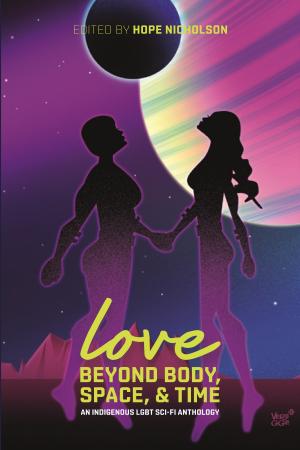
LGBTQ romance isn’t my thing, but I’m interested in this collection because I haven’t encountered many First Nations perspectives on romance. I’m actually pretty sure Disney’s Pocahontas and the Indian Cinderella picture book are the closest I’ve come to First Nations love stories, and I’m not sure these perspectives are very authentic.
Here’s what the Toronto public library says of this book: “Love Beyond Body, Space, and Time is an anthology of science fiction and urban fantasy stories starring First Nations and Métis characters with a LGBT and two-spirit theme.” This title features authors such as Cherie Dimaline (Métis), Nathan Adler (Saulteaux), Daniel Heath Justice (Cherokee), Mari Kurisato (Saulteaux), Darcie Little Badger (Lipan Apache) and more!”
The Marrow Thieves by Cherie Dimaline

The premise of this one is extremely intriguing to me, and it’s written by a Métis author. Here’s what the Toronto public library says:
“In a future world ravaged by global warming, people have lost the ability to dream, and the dreamlessness has led to widespread madness. The only people still able to dream are North America’s indigenous population – and it is their marrow that holds the cure for the rest of the world. But getting the marrow – and dreams – means death for the unwilling donors. Driven to flight, a 15-year-old and his companions… take refuge from the “recruiters” who seek them out to bring them to the marrow-stealing ‘factories.'”
The Reckoner Rises Graphic Novel Series by David A. Robertson

I had to throw a graphic novel into the mix! Storytelling is huge for First Nations cultures, and it’s often combined with art, so what better media for indigenous perspectives and stories than a graphic novel?
The Reckoner Rises series is written by Cree author David A. Robertson. From what I can tell, it’s about superheroes and takes place here in Canada! And doesn’t the art look incredible?
I found a lot of this info on the Toronto Public Library website. Check their article on Indigenous Science Fiction for more info about these books and a bunch of other interesting titles!
